
The Invention of Morel Cultivation: A Comprehensive Overview (as of 03/30/2026)
Recent advancements, particularly since 2020, demonstrate reliable indoor and outdoor fruiting, aiming for economically viable and sustainable morel production, a historical milestone.
Historical Context of Morel Discovery
For centuries, morels (Morchella spp.) remained elusive, solely gathered from wild environments, primarily within the North-Central United States, representing a cherished spring delicacy. Their sporadic appearance and mysterious life cycle fueled folklore and limited scientific understanding. Early attempts at cultivation, predating the 20th century, consistently failed, highlighting the complex symbiotic relationships crucial for their natural development.
The breakthrough arrived with advancements in mycology, specifically phylogenetic studies conducted by Kerry O’Donnell and Alejandro P. Rooney in 2011; Their research pinpointed an early Cretaceous origin for Morchella, revealing a history stretching back millions of years and establishing high continental endemism within the Holarctic region. This foundational knowledge paved the way for targeted cultivation efforts, moving beyond mere speculation towards scientifically informed methodologies.
Early Observations and Natural Occurrence
Historically, morels have been observed appearing spontaneously after specific environmental triggers, such as forest fires or disturbances, suggesting a reliance on disrupted ecosystems. Their natural occurrence is strongly linked to symbiotic relationships with tree roots, though the precise nature of these interactions remained largely unknown for extended periods.
These iconic spring mushrooms are particularly prevalent in the North-Central US, becoming a high-value commodity in food markets. Early naturalists documented their presence, but lacked the tools to decipher the underlying biological mechanisms governing their fruiting. The unpredictable nature of wild harvests underscored the need for controlled cultivation, a pursuit hampered by the complexity of replicating natural conditions and symbiotic dependencies.
The Challenge of Morel Cultivation
For decades, successfully cultivating morels proved exceptionally difficult, largely due to the intricate symbiotic relationships essential for their lifecycle. Replicating the natural conditions – specific soil compositions, tree associations, and environmental cues – presented a formidable obstacle. Initial attempts consistently failed, highlighting a fundamental gap in understanding the fungal biology of Morchella species.
The elusive nature of these relationships meant that simply providing a suitable substrate wasn’t enough. Researchers grappled with identifying the precise triggers for fruiting, and the complex interplay between genetic factors and environmental stimuli. This prolonged challenge spurred intensive research into morel mycology, ultimately paving the way for breakthroughs in controlled environment cultivation.
Early Attempts at Morel Cultivation
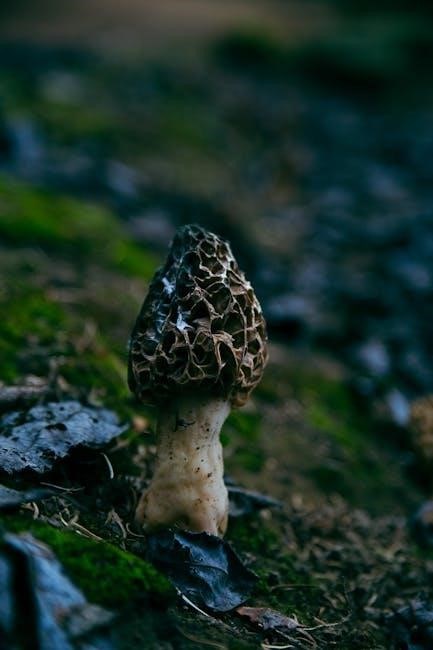
Prior to the 20th century, efforts relied on mimicking natural habitats, consistently resulting in failures due to incomplete understanding of symbiotic needs.
Pre-20th Century Approaches
Early attempts at morel cultivation, predating the 20th century, were largely characterized by observational mimicry of natural environments. Researchers and enthusiasts attempted to recreate the forest floor conditions believed to foster morel growth, focusing on soil composition, moisture levels, and surrounding tree species. These initial efforts, however, consistently met with limited success.
The fundamental challenge lay in a lack of understanding regarding the complex symbiotic relationships crucial for morel development. Without knowledge of the intricate interplay between the fungus and its host trees, or the specific microbial communities involved, replicating natural conditions proved impossible. These early pioneers lacked the tools and knowledge of modern mycology, hindering their ability to unravel the mysteries of morel propagation.
Initial Failures and Obstacles
The persistent failure of early morel cultivation attempts stemmed from a fundamental misunderstanding of the fungus’s lifecycle and ecological needs. Replicating the natural environment proved exceptionally difficult, as the precise triggers for fruiting remained elusive. Attempts to introduce morel spores to suitable substrates often resulted in mycelial growth, but rarely culminated in the desired mushroom formation.
A significant obstacle was the inability to artificially induce the symbiotic relationships essential for morel development. Without understanding the role of specific tree roots or soil microbes, recreating these interactions in a controlled setting was impossible. These early setbacks highlighted the complexity of morel biology and the limitations of pre-20th-century mycological knowledge.
The Role of Natural Symbiosis
Early researchers gradually recognized that morels aren’t solitary organisms, but deeply intertwined with their environment through complex symbiotic relationships. These fungi form mycorrhizal associations with the roots of certain trees – ash, elm, apple, and tulip poplar being frequently cited – exchanging nutrients for carbohydrates.
Understanding this interdependence was crucial, yet replicating it proved challenging. The specific microbial communities within the soil, alongside the tree root interactions, were vital for triggering morel fruiting. Without these natural partnerships, attempts at cultivation consistently failed, emphasizing that successful growth depended on mimicking the forest floor’s intricate web of life;

Breakthroughs in Morel Mycology
Phylogenetic studies, spearheaded by O’Donnell and Rooney, pinpointed an Early Cretaceous origin for Morchella, revealing high continental endemism within the Holarctic region.
Phylogenetic Studies and Species Identification
Significant progress in understanding morel evolution stems from detailed phylogenetic analyses conducted by researchers like Kerry O’Donnell and Alejandro P. Rooney. Their 2011 study, utilizing molecular data, revolutionized our comprehension of Morchella’s history. This research definitively established an early Cretaceous origin for the genus, pushing back the timeline of its existence considerably.
Furthermore, these studies highlighted a striking pattern of high continental endemism and provincialism across the Holarctic region. This means that distinct morel populations have evolved in relative isolation on different continents, leading to unique genetic characteristics. The work of O’Donnell, Rooney, Mills, Kuo, Weber, and Rehner provided a robust framework for species identification and understanding the complex relationships within the Morchella genus, paving the way for more targeted cultivation efforts.
The Early Cretaceous Origin of Morchella
Groundbreaking phylogenetic research, spearheaded by O’Donnell, Rooney, and colleagues in 2011, pinpointed the Morchella genus’s origins to the Early Cretaceous period. This discovery dramatically shifts the understanding of morel evolution, placing their emergence alongside significant geological and biological changes approximately 145 to 100 million years ago.
This ancient lineage suggests a remarkable resilience and adaptability, allowing morels to survive major extinction events and environmental shifts. The Cretaceous period was characterized by warmer climates and different continental configurations, influencing the initial dispersal and diversification of these fungi. Establishing this timeframe is crucial for understanding the evolutionary pressures that shaped modern morel species and informs ongoing efforts to replicate their natural conditions for successful cultivation.
Understanding Holarctic Distribution
The research by O’Donnell et al. (2011) also revealed a strong pattern of “high continental endemism and provincialism” within the Holarctic region – encompassing North America, Europe, and Asia. This indicates that morel species have evolved in relative isolation on different continents, leading to unique regional variations.
Understanding these biogeographical patterns is vital for successful cultivation efforts. It suggests that morel strains may require specific environmental cues and symbiotic relationships tailored to their original continental habitat. The Holarctic distribution also implies a historical connection to ancient land bridges and climate patterns, offering clues about optimal growing conditions and potential for expanding cultivation beyond current geographical limits. This knowledge is key to unlocking morel’s cultivation potential.
The Rise of Controlled Environment Cultivation
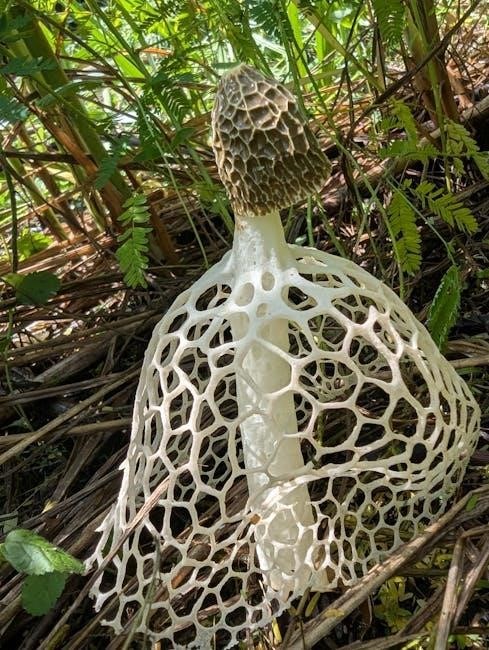
Recent breakthroughs enable reliable indoor and outdoor fruiting of morels, signifying a pivotal shift towards controlled, sustainable, and scalable production methods.
Indoor Cultivation Techniques
The emergence of successful indoor cultivation represents a monumental leap in morel production, moving beyond reliance on unpredictable natural occurrences. This controlled environment approach allows for precise manipulation of key factors influencing mycelial growth and fruiting body formation. Substrate composition is paramount, requiring careful formulation to mimic the natural symbiotic relationships morels establish in the wild.
Researchers are meticulously refining techniques to optimize temperature, humidity, light exposure, and ventilation within these indoor systems. This precision fosters consistent yields and reduces the risk of contamination. The ability to reliably fruit morels indoors, as highlighted by recent advancements, is a cornerstone of establishing a sustainable and economically viable industry. This represents a significant departure from traditional foraging practices, offering a pathway to increased availability and reduced pressure on wild populations.
Outdoor Cultivation Methods
Alongside indoor advancements, outdoor cultivation presents a complementary strategy for morel production, leveraging natural environmental cues while applying controlled interventions. These methods often involve inoculating suitable outdoor plots with morel spawn, carefully selecting locations that mimic the forest floor conditions morels naturally thrive in.

Substrate preparation remains crucial, focusing on replicating the organic matter and soil composition found in morel habitats. Techniques include amending soil with wood ash, sawdust, and other organic materials to encourage mycelial colonization and fruiting. The goal is to create a microclimate conducive to morel growth, balancing moisture, temperature, and sunlight exposure. Successful outdoor cultivation, like its indoor counterpart, aims for economic viability and sustainability, expanding the potential for morel farming.
The Role of Substrate Composition
Substrate composition is paramount in both indoor and outdoor morel cultivation, directly influencing mycelial growth, colonization rates, and ultimately, fruiting body formation. Replicating the natural forest floor environment is key, demanding a complex blend of organic materials. Wood chips, sawdust, and agricultural byproducts are frequently employed, often amended with calcium carbonate (like wood ash) to adjust pH levels.
The ideal substrate provides essential nutrients and maintains appropriate moisture retention. Research focuses on optimizing these blends to maximize yields and consistency. Successful cultivation hinges on understanding the symbiotic relationships morels form with surrounding microorganisms within the substrate, fostering a thriving ecosystem. Careful control of substrate composition is therefore central to achieving commercially viable morel production.
Key Figures in Morel Cultivation Research
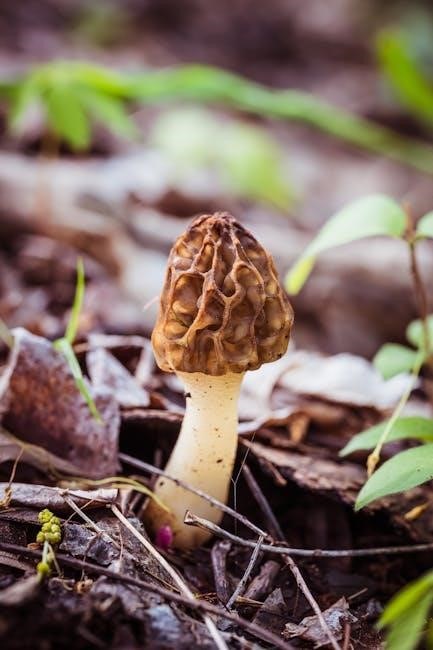
Kerry O’Donnell and Alejandro P. Rooney pioneered phylogenetic studies, revealing the early Cretaceous origin and biogeographical distribution of Morchella species.
Kerry O’Donnell and Phylogenetic Research
Kerry O’Donnell’s groundbreaking work, alongside collaborators like Alejandro P. Rooney, fundamentally shifted our understanding of morel evolution and historical biogeography. Their 2011 research, utilizing phylogenetic analysis, definitively established an early Cretaceous origin for the Morchella genus.
This discovery wasn’t merely academic; it provided a crucial framework for subsequent cultivation efforts. Understanding the ancient lineage and evolutionary relationships within Morchella allowed researchers to better target specific genetic traits potentially influencing successful domestication. O’Donnell’s research also highlighted significant continental endemism and provincialism within the Holarctic region, suggesting localized adaptations that could be leveraged in tailored cultivation strategies.
The detailed phylogenetic reconstruction offered by O’Donnell’s team provided a roadmap for identifying distinct morel species and their potential for cultivation, paving the way for future breakthroughs.
Alejandro P. Rooney and Biogeographical Studies
Alejandro P. Rooney’s contributions, in collaboration with Kerry O’Donnell, were pivotal in unraveling the complex biogeographical history of Morchella species. Their research complemented the phylogenetic work, focusing on how environmental factors and geological events shaped the current distribution of morels across the Holarctic region.
Rooney’s studies underscored the importance of understanding regional variations in morel populations. This knowledge is directly applicable to cultivation, as it suggests that successful techniques may need to be adapted to specific geographical locations and environmental conditions. The identification of high continental endemism and provincialism highlighted the genetic diversity within morels, offering opportunities for selecting strains best suited for cultivation in different areas.
His work provided crucial context for optimizing substrate composition and environmental controls in cultivation efforts.
Bonito and Commercial Viability
Bonito’s work represents a significant turning point in morel cultivation, shifting the focus from purely scientific inquiry to practical application and economic feasibility. His success in achieving reliable fruiting, both indoors and outdoors, is a cornerstone of the emerging morel farming industry. Bonito explicitly stated the goal is to establish morel cultivation as a sustainable and economically viable enterprise.
This achievement addresses a long-standing challenge in mycology – translating laboratory breakthroughs into scalable, profitable production systems. Morels, traditionally a foraged delicacy, are now poised to become a more readily available commodity, particularly within the North-Central US, a current “morel hub”.
Bonito’s efforts are crucial for realizing the potential of morels as a high-value agricultural product.
Nutritional Value and Bioactive Compounds
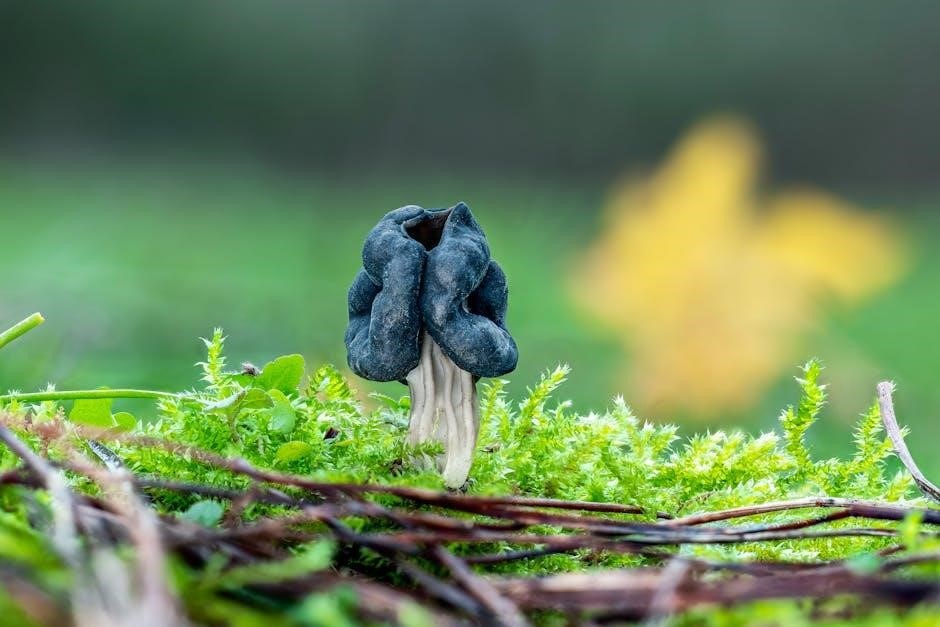
Morels generally exhibit higher total phenolic content than many wild mushrooms like Lycoperdon, Ramaria, and Clavaria, offering potential health benefits.
Total Phenolic Content in Morel Species
Phenolic compounds within Morchella species demonstrate significant variation based on geographical origin. Research indicates that M. conica sourced from Serbia consistently exhibits a higher phenolic content compared to those cultivated in Portugal. This difference suggests a stronger potential for reducing chronic disease risks associated with the Serbian morels.
The composition of these phenolics isn’t uniform across all morel varieties or growing locations, as detailed in available data summaries. Understanding these nuances is crucial for maximizing the health benefits derived from morel consumption. Variations in phenolic profiles are influenced by environmental factors and genetic predispositions within each species.
Comparison with Other Wild Mushrooms
Morels generally possess a notably higher total phenolic content when contrasted with several other commonly foraged wild mushroom species. Specifically, comparative analyses reveal that morels consistently outperform mushrooms belonging to the genera Lycoperdon, Ramaria, and Clavaria in terms of phenolic compound concentration.
This elevated level of phenolics contributes to the enhanced antioxidant and potential health-promoting properties associated with morel consumption. While many wild mushrooms offer nutritional benefits, morels stand out due to their richer phenolic profile, making them a particularly valuable addition to a health-conscious diet. Further research continues to refine these comparative assessments.
Health Benefits of Morel Consumption
The substantial phenolic content found within morel species, particularly Morchella conica originating from Serbia, suggests a potential for reducing the risk of chronic diseases. Higher phenolic levels correlate with increased antioxidant activity, combating oxidative stress within the body.
These bioactive compounds contribute to overall wellness and may offer protective effects against various ailments. While more research is ongoing to fully elucidate the extent of these benefits, the existing data strongly indicates that incorporating morels into one’s diet can positively impact health. Their unique composition makes them a valuable functional food.

Geographical Variations in Morel Composition
Phenolic content differs significantly; Serbian M. conica exhibits higher levels than Portuguese varieties, impacting potential health benefits and showcasing provincialism.
Phenolic Content in Serbian vs. Portuguese Morels
Comparative analysis reveals substantial differences in phenolic composition between Morchella conica specimens originating from Serbia and Portugal. Research indicates that Serbian morels consistently demonstrate a higher total phenolic content when subjected to rigorous testing and evaluation. This elevated concentration suggests a potentially greater capacity for antioxidant activity and, consequently, a more pronounced beneficial effect in mitigating the risks associated with chronic diseases.
These variations highlight the influence of geographical location on the biochemical profile of morels, emphasizing the importance of terroir in shaping their nutritional value. The differing environmental conditions, soil composition, and climatic factors likely contribute to these observed discrepancies, underscoring the complex interplay between genetics and environment.
Impact of Growing Location on Bioactive Compounds
The composition of phenolics within morel species is demonstrably variable, heavily influenced by distinct growing areas. This observation extends beyond the Serbian versus Portuguese comparison, suggesting a broader pattern of geographical specificity in bioactive compound production. Different environmental factors – including soil nutrients, temperature fluctuations, and precipitation patterns – likely trigger unique metabolic responses within the fungi.
Consequently, the nutritional and medicinal properties of morels can fluctuate significantly depending on their origin. Understanding these locational impacts is crucial for optimizing cultivation practices and maximizing the health benefits associated with morel consumption. Further research is needed to fully elucidate the complex relationship between environment and biochemical composition.
Continental Endemism and Provincialism
Phylogenetic studies, notably those conducted by O’Donnell and Rooney in 2011, reveal a fascinating pattern of high continental endemism and provincialism within the Holarctic region for Morchella species. This suggests that morels have undergone significant evolutionary divergence across different landmasses, resulting in unique regional variations.
The research points to an early Cretaceous origin for the genus, approximately 145 to 66 million years ago, coinciding with the breakup of supercontinents. This geological history likely played a pivotal role in shaping the current distribution and genetic diversity of morels. Understanding these biogeographical patterns is essential for conservation efforts and targeted cultivation strategies.

Current State of Morel Cultivation
Morel cultivation is gaining traction, particularly in the North-Central US, establishing itself as a high-value commodity with increasing economic viability and sustainability.
Economic Viability and Sustainability
The pursuit of economically viable and sustainable morel cultivation represents a significant shift in the industry, moving beyond solely relying on wild foraging. Recent breakthroughs in controlled environment techniques, both indoors and outdoors, are pivotal to this transition. Bonito’s work highlights a commitment to establishing morel farming as a legitimate enterprise.
This newfound ability to reliably fruit morels is crucial for meeting increasing market demand for this high-value commodity. Sustainability is addressed through reduced reliance on wild populations, potentially alleviating pressure on natural ecosystems. Further research and optimization of cultivation methods will be essential to enhance profitability and ensure long-term ecological balance, solidifying morels’ position in the agricultural landscape.
The North-Central US as a Morel Hub
The North-Central region of the United States has historically been, and continues to be, a central location for morel mushrooms (Morchella spp.). This region’s established presence in the morel trade is now being leveraged with the advent of successful cultivation techniques. The area benefits from a pre-existing infrastructure and knowledge base surrounding morel foraging and market distribution.
The concentration of research efforts, coupled with the region’s favorable environmental conditions, positions it as a leading force in the expanding morel cultivation industry. This geographical focus allows for streamlined development and dissemination of best practices, ultimately contributing to the economic growth and sustainability of morel production within the US.
Market Demand and High-Value Commodity Status
Morels consistently command high prices in food markets, establishing their status as a valuable commodity. This strong demand is fueled by their unique flavor profile and limited natural availability, historically reliant on wild harvesting. The recent breakthroughs in controlled cultivation are poised to meet this demand more reliably, potentially stabilizing supply and broadening market access.
The economic viability of morel cultivation, as highlighted by researchers, is a key driver for its expansion. Successful indoor and outdoor techniques are now enabling production to scale, promising increased profitability for growers and continued premium pricing for this sought-after fungal delicacy. This positions morels for sustained growth within the specialty food sector.

Future Directions in Morel Research
Ongoing research focuses on optimizing cultivation, genetically improving strains, and expanding global production, building upon recent phylogenetic and biogeographical discoveries.
Optimizing Cultivation Techniques
Current efforts prioritize refining both indoor and outdoor cultivation methods to enhance yields and consistency. A key area involves meticulously analyzing and adjusting substrate composition, seeking the ideal balance of nutrients and physical properties to stimulate robust mycelial growth and fruiting body formation. Researchers are investigating various carbon and nitrogen sources, alongside trace elements, to maximize morel development.
Furthermore, controlling environmental parameters – temperature, humidity, light exposure, and ventilation – within controlled environments is crucial. Understanding the specific needs of different Morchella species throughout their lifecycle will allow for tailored cultivation protocols. The goal is to move beyond simply inducing fruiting to achieving predictable, high-quality harvests, ultimately driving down production costs and increasing accessibility.
Genetic Improvement of Morel Strains
Leveraging phylogenetic studies, particularly those conducted by O’Donnell and Rooney, provides a foundation for targeted genetic improvement. Understanding the early Cretaceous origin and high continental endemism within Morchella species informs breeding strategies. Identifying strains exhibiting superior traits – faster growth rates, higher fruiting frequencies, enhanced disease resistance, and improved nutritional profiles – is paramount.
Modern techniques, including marker-assisted selection and potentially gene editing, offer avenues to accelerate this process. The aim isn’t to create genetically modified organisms, but rather to selectively breed existing strains with desirable characteristics. Preserving genetic diversity within the Morchella genus remains crucial, ensuring resilience against future environmental challenges and maintaining the unique qualities of different regional varieties.
Expanding Morel Cultivation Globally
Currently concentrated in the North-Central US, morel cultivation possesses significant potential for global expansion. Adapting successful indoor and outdoor techniques to diverse climates and substrates is key. Research into substrate composition, mirroring the natural symbiotic relationships morels form, will be vital for success in new regions.
Understanding geographical variations in phenolic content – as seen in Serbian versus Portuguese morels – highlights the importance of localized strain selection. Tailoring cultivation practices to maximize bioactive compound production in specific environments will enhance market value. Overcoming logistical challenges related to spawn production and distribution will be crucial for establishing viable cultivation centers worldwide, fostering a truly global morel industry.